Wednesday, March 2, 2011

Extra

Credit, that is. It’s what people want. And, apparently, I’m supposed to give it.

I don’t remember having a lot of options for extra credit while I was in school. I’m sure that could be a case of selective remembering. I know that there were certainly times I wanted it. But my memory says it was a bit of a rarity and I even recall one of my college instructors writing it into the syllabus – “There is no
such thing as EXTRA credit!” I remember thinking him a little bit of a hard you-know-what but didn’t give it much thought beyond that.

These days, extra credit seems to be the expectation – and not just from students. We get emails from various people pushing their particular special interest on campus and wanting us to encourage our students to participate. They are helpful enough to give us a list of ways to do this including, inevitably, “offer your students extra credit to…” We want them to participate in a campus conference – offer extra credit. We want them to attend a campus speaker – offer extra credit. We want them to attend Success day – offer them extra credit. We want them to participate in the campus food drive/book drive/coat drive – offer them extra credit.

In the beginning of my teaching career, I admit I didn’t give this much thought. I occasionally offered students the option of earning extra credit by attending a campus speaking event and writing something (evaluation, response) that related the speaking event to the course theory. I quickly learned, though, that the extra work was not worth the extra credit – for me or for my students.

More significantly, I once gave students the opportunity to earn extra points by donating to a campus food drive. Many did, but many didn’t. One of the ones who didn’t, was gracious enough to come talk to me privately. Our conversation changed my approach. She told me that she would have loved to have earned the extra points and would have loved to give to the food drive, but that her family had to actually make use of the food shelf so she couldn’t give. I realized that my ‘extra credit option’ actually amounted to selling grades to the wealthier of my students. Ouch.

This experience caused me to step back and really evaluate the notion of ‘extra credit.’ Having done so, I’ve eliminated it from my teaching. I arrange my courses so that grades are earned based on a number of assignments worth smaller amounts of points. Doing poorly on or missing any one assignment won’t kill anyone, nor will it make the difference between any two grades.

I’ve determined that to be in line with my own philosophy of education, grades should not be based upon sheer volume of work. If I give enough ‘extra credit’ options, anyone should be able to get enough points to earn an ‘A’. But grades and evaluation should be about more than simply amassing points. They should be about quality as well, and they should distinguish between students operating at different levels of expertise, effort and ability. Not everyone should get an ‘A’. Not everyone is exceptional. And, for me, if that ‘A’ isn’t earned outright but given away through a process of ‘extra credit’ makes the concept of grades essentially meaningless.

I’m sure that many of my students will disagree with me. I’m sure that many of my colleagues will as well. However, I’m content with grading the work that has been assigned, and evaluating my students’ performance on that basis, and leaving the ‘extra’ to others.

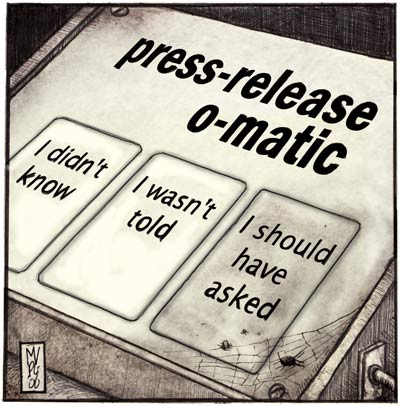
Image from: blogs.edweek.org

Wednesday, February 16, 2011

Excuses

It’s the first day of Speeches. Let the excuses begin!!

My students deliver 4 researched and prepared speeches in my Public Speaking classes in addition to 5 limited preparation speeches. We’ve been preparing for this day since the first week of class. Every day we have covered another concept to help make students ready for this speech – organization, supporting material, outlining, introductions, conclusions, research. The course is designed very carefully to build up to this first speech. We cover all the material in order and I require students to hand in work along the way – first a thesis statement, then main point ideas, then a rough outline, then a finished outline.

Students are allowed to choose their speech day. We have 3 days of speeches this round, and students volunteered to go on specific days. They have chosen when they wanted to give their speech. There’s absolutely no reason to not be prepared.

And yet, the excuses come. “I won’t be in class today. I know I’m supposed to speak, but…” A full one-fifth of the students scheduled to speak made an excuse as to why they couldn’t.

I often joke (as do many Public Speaking instructors) that taking a Public Speaking class is hazardous. It results in the death of untold grandparents, aunts, uncles and cousins as well as numerous family pets. It fosters all manner of illness from the general malaise of ‘I’m just not feeling well at all,’ to the flu, to laryngitis, to fevers and chills of unknown origin. It results in various family members having to go out of town for various emergencies, and they must take flights that require them to be taken to the airport during the scheduled speech time. It even has been known to send friends, sisters, and boyfriends’ sisters into labor requiring the immediate attendance of a speaker at the hospital for the event.

While all these are certainly valid life events, it is fascinating to me how much more likely they are to occur if the student is enrolled in a Public Speaking course.

It’s not like there aren’t consequences for not speaking as assigned. It’s an automatic letter grade deduction and then another letter grade for every missed speaking opportunity. The highest grade most people who give a late speech end up earning is a C. Many end up with a D or an F. And, the reality is, that many people who aren’t ready to speak on their assigned date are never ready, and end up not giving the speech at all – a 0. Failing to give one of the 4 major speeches, generally results in a course grade no higher than a C, often lower. That’s not a pre-determined policy – it’s simply the results I’ve seen over and over through years of teaching this course.

Of course, excuses abound, even outside of the Public Speaking classroom. We see them in our workplace, with colleagues, in our friendships and family relationships. There’s something almost instinctive in the self-protective nature of the excuse. It’s not really my fault – it’s beyond my control. That allows me to convince myself that I wasn’t lazy or unorganized. It’s not that I’m irresponsible or unprofessional. It’s not that I was thoughtless or purposely disrespectful. I have an excuse.

Listening to my students’ excuses makes me painfully conscious of my own. And that awareness, while it doesn’t change or erase the consequences of my students’ choices, does give me a greater understanding of what they’re experiencing, and a greater compassion as well.

(I tried to create my own image, but couldn't figure out the software... so I snagged this image from this site: ashleybolivar.com)

Friday, January 21, 2011

Magic

We are at the end of the second week of the semester. Enrollment in classes has more or less evened out. The students who are coming to class have, more than likely, the intention of finishing out the semester. Whether they are able to do so successfully, though, will depend on any number of factors. Unfortunately, the majority of those factors are absolutely out of my control.

Yesterday we had our first quiz in one of my courses. First quizzes can be difficult. You don’t know how the instructor writes questions, what type of information they’re looking for, how to read the questions. In this particular course, I provide a study guide for my students in advance. I create the study guide from the actual quiz, making sure that I indicate the topics that will be covered.

I also allow students to use a note card - a ‘cheat sheet’ if you will - during the quiz. I don’t do this in my other courses. I question the wisdom of doing it in this course as well. I wonder if I’m being too easy on them, too indulgent. I justify my choice because of the fact that the material in this course is very foreign to many students and the textbooks are really written at the 3000/4000 level as opposed to the 2000 level where this course, of necessity, resides on our campus. Even with the study guide and the note card – many students average a solid ‘C’ on quizzes throughout the semester. In the past I have attributed this to the difficulty of the course material and the ‘newness’ of the topic to most of my students. Today I am questioning those assumptions.

After the class a student approached me to talk about the quizzes. He admitted he didn’t think he had done well on the first quiz – earning 6 out of 15. He is correct in his self-assessment. He asked whether the remaining quizzes would be as hard. I assured him that they would. I then went on to give him advice about how to study. My comments went something like this:

When you sit down to read the chapter, be sure to have the study guide with you. As you are reading, take notes on the concepts that are listed on the study guide, summarizing the ideas in your own words. Check off each item as you come to it, to make sure you don’t miss anything in the reading. Then, study the notes you’ve made on the study guide. After that, condense the ideas down into more concise wording to put the concepts on your notecard. If you do this, you should be pretty well prepared to do well on the next quiz.

This student looked at me as though I had grown a second head. His response was, “I don’t have time for that.”

My student asserted that he had other classes and life obligations and that he just wasn’t going to spend that much time on this. When I suggested that he should consider whether he should be taking the class this semester, that maybe 4 classes was too many for him, he was quick to assert that he wasn’t going to drop the course. He just doesn’t have the time to do the basic studying required. When I
reminded him that there were assignments other than the quizzes - group projects, papers – he simply repeated that he doesn’t have time for this.

It was a fascinating experience. I could literally see the magical thinking going on in this student’s head. I “shouldn’t” demand so much of him. I “shouldn’t” expect him to read or study. I “shouldn’t” advise him to reconsider his decision to take this course. I “should” change my standards and make my course easier. I “should” ask less. I “should” reduce the course expectations. He ‘should’ be able to get a good grade in the course without actually doing any reading, writing or studying.

So where does this thinking come from? Have we watered down our educational system so much that even the most basic expectations of reading and taking notes are now considered ‘too demanding?’ Is any expectation of prioritizing school, homework, and studying above socializing or personal life simply an archaic notion that doesn’t recognize modern life and its demands? Do we really expect that we can learn a new concept without any effort on our part? Do we really expect to have a college degree handed to us in exchange for a swipe of our credit card?

Maybe it’s the consumer mentality that has taken over much of academia. Maybe it’s the sense of entitlement that we hear talked of so much in reference to this particular generation. Maybe it’s simple, old-fashioned laziness. Whatever it is – the result for my student is grave disappointment. The quizzes won’t get any easier, the demands of the class won’t get any lighter. I’m sticking to that old-fashioned standard that you do have to read, you do have to write, you do have to study.

today’s image - flickr.com

Tuesday, January 4, 2011

Boundaries

In December I was in conversation with a couple of my colleagues and the topic of technology came into the discussion. Both of these colleagues teach on-line, one entirely and one partially. They were making the point that I just didn’t understand the demands of such work – that they were forced to work more and harder in order to teach in that particular environment than I do in a traditional, face-to-face classroom. Hmmm.

I know that one of the difficulties of the working world is the comparisons. We have been raised in a competitive culture – where it is rewarded to do better than the person next to you. One of the things that engenders, then, is the tendency to compare ourselves to others. We look at others to make sure that they are working as hard as we are – putting in the same effort, the same time. I think that it is also human nature to assume at some level (perhaps unconscious) that we work harder, better, longer than others around us. It certainly is consistent with that tendency in perception that we teach in the Interpersonal classes – “we see ourselves in the best possible light.” I know that I succumb to this tendency as well. I think (hope) I’m just not quite so quick to say that thought out loud to one of my colleagues!

I admit that I didn’t react all that well. I suggested that we all work hard and I didn’t really believe that they worked any harder than the rest of us – they just worked ‘differently.’ One of them then asserted that I just didn’t understand the demands and expectations that have been put on them – answering emails at 3 am, for example. That’s where I really lost it. I asserted that they were feeding me a line of crap and that I didn’t believe a word of it! How’s that for direct? I told them very clearly that in my opinion they both needed to get a life and set some boundaries! (And yes, I know I could have said it a little more gently.) I answer student emails from home. I answer student emails on weekends. I do NOT answer student emails at 3 am. And, if any administrator ever tells me that I need to be answering student emails at 3 am, then it’s time for a chat with my union grievance representative!

This morning when I logged on to my Facebook page there was a posting from the college’s Humanities and Fine Arts page. It contained a link to an article in today’s edition of The Chronicle of Higher Education that focused on some of the latest technologies that can enhance our teaching. In this article, the author makes reference to a professor at the University of Texas at Dallas who keeps his syllabi loaded on a hand-held device so that “when a student emails to ask about an assignment deadline while Mr. Parry is at the grocery store, he knows.”

Really? Now I’m expected to answer a student email while I’m at the grocery store?

Please don’t misunderstand. I believe in being available to my students to answer questions. If a student wants me to look at a rough draft or an outline, or has a question about a concept that they are trying to understand as they study for the next exam, I am more than happy to respond to those questions, even at home, even on the weekend. But carrying my syllabi around so that I can tell a student when a paper is due while I’m buying my groceries seems beyond a reasonable expectation to me. That student was given a copy of the syllabus when they enrolled for the course. They can just as easily look up that information as I can. Why on earth should I be responsible for taking charge of that student’s calendar or schedule? This hardly seems like helpful help to me. One of the skills we all need to learn is the ability to track and manage our own deadlines and responsibilities.

It seems to me that with this increasing encroachment of technology into all our lives we all need to be more diligent about setting some boundaries. You don’t have to answer your cell phone every time it rings. You don’t have to respond to a text message the moment it comes in. You don’t have to reply to an email at 3am. We all need down time – private time. We need time to breathe, time to think, time to relax, time to imagine. Not putting boundaries on the technology demands in our lives eats away at the margin- the white spaces in our lives that allow us to do that necessary regrouping.

So, we’re gearing up to start a new semester. I intend to be available to my students. I intend to be responsive and flexible. I intend to do my job well. I intend to do so with clear boundaries about where my work life ends and my personal life begins.


Today’s image comes from
corbisimages.com

Friday, December 31, 2010

Change

It’s that time of year, when…lots of people make lots of resolutions that they will quickly abandon, fail at, or simply forget. It’s an interesting phenomenon in our culture, one that I’ve never really adopted. I suspect it might be because I have spent my entire life from the age of 5 in an academic environment. For me, January is the beginning of the middle of the year. The ‘new year’ always begins in August for me – the Academic year is the way in which I tend to measure time movement. So this time of New Year’s resolutions and starting fresh has always felt a little bit ‘behind’ to me. It’s a time for mid-course corrections, yes, but the ‘new beginning’ came 4 ½ months ago.

Yet everyone else seems to be focused on all the new things they will begin to do starting tomorrow. The magazines in the grocery aisle, the morning news programs on TV, the talking heads on the radio have all been full of it recently. Losing weight seems to top the list, followed closely by starting an exercise program, getting organized and de-cluttering, getting your finances in order, starting or ending a relationship.

I get the tendency. Anyone with even a modicum of self awareness is probably doing regular ‘progress checks’ on their life. How is this working for me? Am I getting where I want to be? Why not? What can I change? What can I do differently? But this pressure that our culture puts on us to make a massive change starting January 1 is an odd one to me and, truth be told, one that doesn’t seem particularly effective. If I come to the awareness that I need to change something, why wait until a page turns on the calendar? Why wouldn’t I start now?

I suspect that the ‘New Year’s part of the resolution making process is a way of saying (without really admitting to it) that I really don’t want to change or I’m really not ready to make the change. I recognize that I should or want a different outcome in my life, but I’m not yet ready to change the way I do things to make it happen. Or, maybe I’m just not convinced that if I’m not just a little more patient, things will eventually turn out the way that I want them to. Or, perhaps the real problem is in the unrealistic nature of the resolutions that we make.

Last year I made a resolution. I didn’t set out to make one – it evolved from a moment of clarity I experienced while eating lunch one day at my desk. We were in the beginning of the semester so it must have been the second or third week of January. I was eating a bowl of soup – Progresso minestrone – chock full of all things that are ‘good for you.’ There were kidney beans, great northern beans and lima beans – all of which I hate. But I was eating it – why? Because it was “good for me.” At that moment I had an epiphany. I’m an adult. I don’t have to eat food I don’t like just because it is good for me. I can make a choice about what I put in my mouth. I don’t like lima beans. I don’t have to eat lima beans EVER again.

So I got up, walked down to the break room, scraped the remains of my bowl of soup into the garbage and washed my bowl. When my secretary asked what I was doing, I announced – “I’ve just made a New Year’s resolution. I’m not eating any food that I don’t like just because it’s good for me.”

I have been completely successful at keeping my resolution. I have adapted recipes that have called for ingredients I don’t like by substituting ingredients I do like. The results might seem a little unorthodox to some, but they taste perfectly fine to me and they don’t contain mushy beans. An unforeseen benefit is that I have been even more conscious of making healthy food choices than I was before. Because I know that I have eliminated something ‘good for me’ from my food repertoire, I have been consciously aware of replacing it with something else that is good for me. My intake of bright green veggies has increased significantly now that I have eliminated those nasty, mushy things from my diet. This year’s resolution? – to continue keeping last year’s.

So the lesson for me is a simple one. Take charge of your life and your decisions and own them. Do it now. Don’t wait until the calendar turns a page or until you use up the last of something. Decide what needs doing and do it. Be resolved.

the calendar comes from:
avoca37.org

Sunday, December 19, 2010

Music

I have always loved music. I know I'm not alone in saying that. I do a "bag" speech in my Public Speaking classes as a way of giving students an 'easy' first speech. All they have to do is put 6 items in a bag that represent significant parts of their personality or life, use them as visual aids, and tell us why they are so important to them. I believe out of 50 speeches this Fall semester, 49 of them included an iPod and the phrase "music is my life." I won't go that far (or be quite that cheesy) but I do enjoy music.

Since I was a child, I have wanted to play piano. I love piano. As I've mentioned before, we were poor and there simply was not extra money for piano lessons, particularly as there was no piano on which to practice. In grammar school, of
course, you could take instrument lessons, but since you generally ended up playing the instrument they needed you to play to fill out the 'orchestra' I was assigned to the cello. A beautiful instrument, I am certain, but not for a third grader who couldn't get her arms around it to play it, much less lug it back and forth to school. I don't think I lasted more than a few months, especially once the snow fell.

When I was in college I did take piano lessons for a couple of years. I was at a small liberals arts Christian college that had a fine music program. There were practice rooms available and, believe me, not much else to do that wouldn't get you into massive amounts of trouble. So, the means of practicing was there and I did take advantage of it. Unfortunately, being surrounded by music majors who had been playing since childhood was a bit intimidating and I did let that influence my confidence level. Then, when I transferred to a state university and declared a Communication/Theatre major -- well, let's say that rehearsals and traveling immediately took the place of practicing. My piano playing, such as it was, fell by the wayside.

And, yet, it was always there in the background - the desire to play. I listen to classical piano music - it is often on in the background while I work. I appreciate the simplicity of the notes, the melodies, the life of it. I often thought that I might like to take lessons again when I retire. It would be a way to keep my hands moving despite my arthritis. It would be a way to keep my brain moving - they say that playing piano is an excellent way to develop new neural pathways that help fight off the effects of aging.

And, then a little miracle happens. I have been gifted a piano. It arrived yesterday. Two big strong guys brought it in and put it into place. The tuner is coming tomorrow, although it is surprisingly in tune after having been moved in such cold weather. It is beautiful, and accompanied by a (blessedly) padded bench. I have been obsessed since it arrived. I have taken breaks to stretch, to eat, to sleep, and now to write, but not much else. I am fascinated by every sound that it makes, by every tone, every note. It may be a very long time before I am actually able to play something recognizable, and I don't care. I am playing. Piano.

Saturday, December 11, 2010

Responsibility

I’ve met a lot of victims this semester. The stories are as diverse as the people. Some are sad, some are entertaining, some are a little frightening, some are completely ridiculous - Really. All contain one element – excuses. “It wasn’t my fault...” “If only…” “But you should have…” “If only they hadn’t…” “I deserve…” “If it weren’t for…”

I have not blogged much in the past few months since returning full time to campus. I have several reasons that I could give you that reflect how much less time I have to write this year than I did last year. I spend at least an hour a day “getting ready” for work – hair, make-up, clothes, packing a lunch, organizing my stuff. I spend at least an hour a day commuting to and from work. While I worked hard last year from home, working at the office is a different kind of work. There are meetings, and committee work, and people dropping in all day long. I can be ‘at work’ for a full day and not get one paper graded. So, the papers come home with me to be graded in the evening which means that time I might spend blogging is spent on other things.

There you have it. Enough excuses for you? The fact is that while all of these demands on my time are true and real and are part of the reason I have not written much – not one of them is an excuse. The truth is that I have made choices about how to use my time. I have chosen grading over writing. I have chosen socializing over writing. I have chosen sleeping over writing. But, make no mistake, I have chosen.

I am, I admit, disturbed by all the excuses I hear. Well, maybe that’s not exactly accurate. Making excuses is probably human nature. Which of us wouldn’t ideally want to have a constant scapegoat – someone upon whom we could push blame for every mistake, error in judgment, or plain bone-headed move that we make? It would be wonderful. I understand the inclination. I guess what really disturbs me is not so much the excuses but the refusal of so many to take responsibility for the choices that they make when the excuse is revealed for what it really is – a choice.

I think what makes it difficult for many is their own judgment of their choices. Maybe at heart, people recognize that one choice is less productive than another they could have made. Rather than acknowledging the choice – maybe a poor one – it’s easier to make the excuse. Certainly it’s a better choice to get up and take some exercise in the morning – but exercise is hard work. So much easier to claim that we’re too busy or there’s too much to do. We are busy. There is a lot to do. We choose whether to let those things take priority over our exercise or we choose to drag ourselves out of bed a little earlier and go exercise. Perhaps acknowledging that we make choices would force us to see ourselves as we really are. Fallible. Self-centered. Lazy. Irresponsible. And maybe that’s something that our fragile egos just cannot handle.

A new semester begins in January. I expect that I will meet many more victims in the coming months. I expect that the excuses will continue and continue. And I suspect that many of us will continue on, refusing to own up and take responsibility for the choices we are making – myself included at times, unfortunately. So maybe it’s the AA model here – one day at a time, one choice at a time. I suspect we’re all going to need a higher power.

www.clarityaccounting.com
is responsible for today's image.